


A patient wristband QR code may seem routine, but it reveals a larger healthcare cybersecurity lesson. Clinical workflows need verified trust across identity, devices, sessions, applications, networks, and MXDR monitoring.
I did not expect to find a cybersecurity lesson while lying in a hospital bed counting the ripples in the ceiling tiles, but that is where this one started.
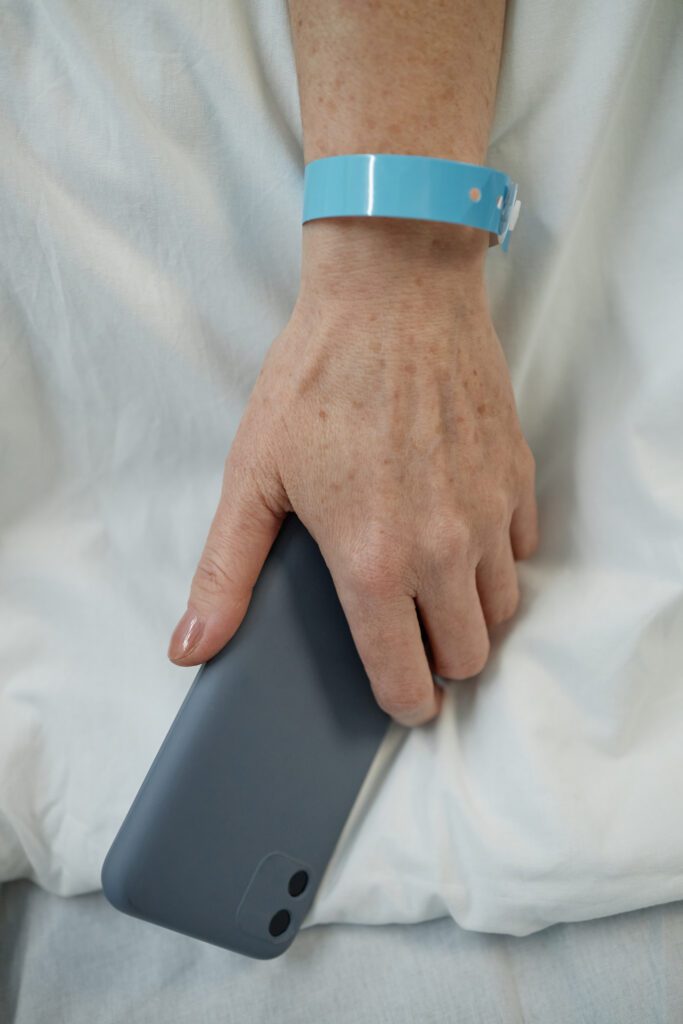
After an unfortunate turn of events, I spent several days in the hospital. Like every patient, I was given a wristband. Name, date of birth, medical record details, and a QR code. Nothing that looked especially remarkable at first glance. It was just part of the hospital routine.
Then I started noticing how often that wristband became part of the workflow.
A nurse came in and scanned it before administering medication. A technician scanned it before taking vitals. A doctor referenced it as part of the care process. The wristband helped confirm who I was, what I needed, when I needed it, and what had already been done. I am sure it supported several other processes behind the scenes as well, from medication administration records to audit trails and patient safety controls.
From a patient safety perspective, it made perfect sense. From a cybersecurity perspective, it raised a question that was hard to ignore.
What if someone could replicate the look and feel of that QR code?
Not to print a novelty badge or bypass a waiting room process, but to interfere with the trust model behind the clinical workflow. What if the wristband, scanner, workstation, user session, and clinical system were not treated as separate controls, but as a chain of assumed trust? What if an attacker found a way to use that chain to manipulate records, trigger incorrect actions, access sensitive data, or move deeper into the hospital environment?
To be clear, this is not a guide on how to do that. It should not be read that way. The point is not the mechanics of an attack. The point is that modern healthcare depends on small digital interactions that are easy to overlook because they are embedded inside normal clinical care.
That is exactly what makes them important.
What This Means For Healthcare Workflow Security
A patient wristband QR code should be treated as one signal in a broader healthcare workflow, not as proof that the entire transaction is trusted. Security teams should validate the user, device, session, application, network, location, and action context before assuming trust.
Why The Patient Wristband Is Not The Security Boundary
The wristband is there for patient identification, care coordination, medication safety, and operational tracking. It is not meant to carry the full weight of security by itself.
In many environments, especially busy clinical environments, workflows are designed around speed and safety. That is appropriate. Nobody wants a nurse slowed down by unnecessary technical friction when they are trying to deliver medication or respond to a patient. At the same time, healthcare systems cannot afford to confuse workflow convenience with security assurance.
A QR code on a wristband should be treated as one signal. It may help identify the patient record or support a transaction, but it should not automatically imply that everything around the transaction is trusted.
The scanner matters. The workstation matters. The authenticated user matters. The application session matters. The network segment matters. The device health matters. The behavior of the account matters. The context of the action matters.
Security fails when all of those separate checks collapse into one assumption: the scan happened, so the action must be legitimate.
The Clinical Trust Chain
The scan is only one part of the workflow. A secure clinical trust chain includes the patient identifier, scanner, workstation, authenticated user, application session, device health, network segment, and requested action.

Why Healthcare Workflow Security Matters
In a hospital, the consequences of a compromised workflow are not limited to data loss.
Yes, protected health information is highly sensitive. Yes, privacy matters. Yes, unauthorized access to patient records is serious on its own. However, the larger concern is that healthcare systems increasingly connect digital trust to physical outcomes.
A manipulated medication workflow could affect patient safety. A compromised clinical workstation could expose patient records or alter the integrity of documentation. An attacker with access to one part of the environment could move laterally into billing systems, imaging systems, identity platforms, file shares, or other operational systems. A disruption to clinical applications could slow care delivery across an entire unit.
In healthcare, “availability” is not just an IT metric. It can very quickly become a care delivery issue.
That is why these scenarios deserve attention. Not because every QR code is dangerous, and not because every workflow should be buried under friction, but because small points of digital trust can become meaningful attack paths when they are not governed, monitored, and validated.
How To Secure Clinical Workflows Without Slowing Care
The answer is not to make clinical teams fight the technology. The answer is to design security controls that understand the reality of care delivery.
Identity & Access Controls
That starts with identity. Clinical users should have clear role-based access, strong authentication where appropriate, and session controls that match the sensitivity of the action being performed. Shared workstations, tap-and-go access, badge workflows, and mobile clinical devices all need controls that reflect how they are actually used.
Device Trust
Device trust is just as important. Scanners, workstations, tablets, and carts should be managed assets with known configurations, patch status, endpoint protection, and monitored behavior. An unmanaged or unhealthy device should not be treated the same as a known clinical endpoint.
Network Segmentation
Network segmentation also matters. Clinical systems should not sit in a flat environment where a single compromised endpoint can easily reach unrelated systems. Segmentation does not eliminate risk, but it limits blast radius and gives security teams better places to detect unusual movement.
Application Context & Audit Trails
Application-level controls are critical as well. The system should understand more than whether a barcode or QR code was scanned. It should understand who performed the scan, from which device, in which location, against which patient record, and whether the action aligns with the user’s role and normal workflow.
That is where audit trails become more than compliance artifacts. They become security signals.



How MXDR Helps Protect Healthcare Environments
This is where a mature MXDR capability becomes valuable.
Correlating Signals Across The Environment
A good MXDR service is not just watching for malware alerts. It is looking across identity, endpoint, email, cloud, SaaS, network, and operational signals to identify behavior that does not belong. In a healthcare environment, that broader view matters because an attack rarely stays inside a single system.
For a scenario like this, MXDR can help detect and respond to suspicious patterns such as unusual access to patient records, unexpected activity from clinical workstations, abnormal use of privileged accounts, impossible travel or unusual sign-in behavior, new or unmanaged devices attempting to interact with sensitive systems, lateral movement between segments, or endpoint behavior that suggests hands-on-keyboard activity.
It can also help correlate events that may look harmless in isolation.
A workstation accessing an application may be normal. A user opening a patient record may be normal. A QR scan may be normal. A script running from the same endpoint, followed by authentication anomalies and unusual network connections, is a very different picture.
That correlation is the difference between collecting alerts and understanding risk.
What MXDR Adds
MXDR helps connect identity, endpoint, cloud, SaaS, network, and application signals so that healthcare organizations can detect suspicious behavior in context and respond without unnecessarily disrupting care.
Responding With Clinical Context
MXDR also brings response discipline. When something suspicious happens, the organization needs more than a notification. It needs triage, containment, investigation, escalation, and clear communication. In a hospital, that response has to be coordinated carefully so security actions do not unintentionally disrupt patient care.
Containing an endpoint, disabling an account, blocking a connection, or isolating a segment may be technically simple. Doing it safely in a clinical environment requires context.
The Real Lesson For Healthcare Cybersecurity
The lesson from the hospital wristband is not that QR codes are inherently unsafe. They are useful, efficient, and in many cases essential to modern clinical care.
The lesson is that every digital shortcut creates a trust decision.
Most of the time, those trust decisions are invisible. They happen in the background while people are doing their jobs. A nurse scans a wristband. A workstation opens a record. A medication is authorized. A timestamp is written. A workflow moves forward.
That is exactly why security teams need to understand them.
Healthcare security cannot focus only on the obvious systems. It has to account for the everyday interactions that connect patients, clinicians, devices, applications, and data. The most important risks are often not sitting in a data center with a label on them. They are embedded in the moments where technology quietly enables care.
Lying in that hospital bed, I was grateful for the people taking care of me. I was also reminded that the technology supporting them carries a serious responsibility.
Security in healthcare is not about slowing care down. It is about making sure the trust behind that care is deserved, verified, and monitored.
That is where identity, endpoint management, segmentation, application controls, audit logging, and MXDR all come together.
Not as separate tools, these are checks and balances for a system where the stakes are very real.

Protect Clinical Workflows With ThreatDefender
Our ThreatDefender MXDR service ensures healthcare organizations detect suspicious behavior across identity, endpoints, cloud, SaaS, network, and security operations signals before small trust gaps become bigger risks.